Tools for Conflict Analysis and Resolution: Psycho-political aspects of the Israeli-Palestinian case

The Israeli-Palestinian conflict has always been a fascinating case study of difficult intergroup conflicts. Like many other conflicts, it rages over contradictory goals and interests in different domains, and it is real. But since human beings are the ones who initiated it, take part in it, and try to resolve it, the psychological and social aspects of this conflict have to be studied as well in order to comprehend its dynamics and the various powerful forces which fuel and maintain it. This course provides students with knowledge of basic theories of conflict analysis, characteristics of intractable conflicts, and then moves to discuss the Israeli-Palestinian conflict as the main case study: its socio-psychological infrastructure and its functions for the involved societies. For each one of the topics that will be addressed in the course, we will present the general theoretical framework for explaining and understanding it, and subsequently implement it in the Israeli-Palestinian case using up-to-date empirical studies and opinion polls, as well as class discussions. Furthermore, we will explore psychological interventions to create peaceful change in the conflict.
- Enseignant: Nimrod Rosler
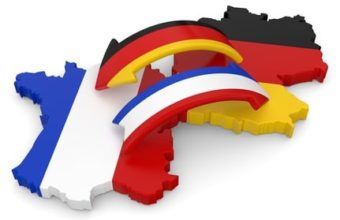
Au premier semestre, cet enseignement se concentrera sur la maîtrise de l’histoire politique des relations franco-allemandes depuis la fin de la Seconde Guerre mondiale. L’évolution des relations franco-allemandes, avec ses phases de difficultés et de rapprochement, est intrinsèquement liée à l’histoire de la construction européenne, dans un rapport qui peut aller de la tension à la convergence. C’est pourquoi relations franco-allemandes et construction européenne seront ici traités conjointement. Cette approche doit fournir des repères solides pour éclairer les relations actuelles entre les deux pays, de même que leur position en Europe et dans le monde.
- Enseignant: Elise Julien